


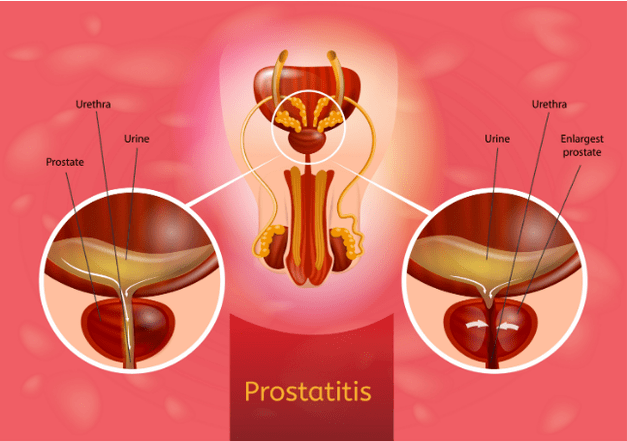
Prostatitis is a disease of the prostate gland (prostate), which develops as a result of inflammatory changes in it.According to statistics, the prevalence of the disease reaches 35-50% and occurs in men aged 20-40.
species
There are 4 forms of prostatitis:
- acute (bacterial);
- chronic bacterial;
- chronic non-bacterial;
- Asymptomatic chronic.
Acute prostatitis is very rare due to the rapid course of the inflammatory process and the immediate transition to the chronic stage (false improvement).
Chronic non-bacterial prostatitis, otherwise known as chronic pelvic pain syndrome, can be inflammatory (with an increased content of leukocytes in the urine and ejaculate) and non-inflammatory.
reasons
The cause of acute and chronic bacterial prostatitis is pathogenic microorganisms (viruses, bacteria, fungi).The most common sources of inflammation are:
- coli;
- streptococci;
- staphylococci;
- Proteus;
- Klebsiella
- Pseudomonas aeruginosa;
- Agents causing sexually transmitted diseases (chlamydia, mycoplasma, gonococci, trichomonas, cytomegalovirus and others).
Most of the microorganisms are found in the intestines, on the skin, but when they enter the prostate tissue, they cause an inflammatory process.As a rule, the cause of the disease is not a single pathogen, but an association of several types of microbes.
The development of chronic prostatitis can be caused by the following factors:
- accompanying diseases of the urogenital system (cystitis, pyelonephritis);
- sedentary lifestyle ("sedentary" work);
- tendency to constipation;
- weakening of the body's protective forces;
- injuries;
- hormonal imbalance;
- alcohol abuse and smoking;
- obscenity;
- Irregular sex life (long-term abstinence);
- Interrupted sexual intercourse;
- Irregular emptying of the bladder;
- unsatisfied sexual desire;
- chronic stress;
- hypothermia;
- The presence of carious teeth and other sources of chronic infection (for example, chronic tonsillitis).
Symptoms of prostatitis
Acute prostatitis is a very insidious disease.It is quite difficult to "catch" it, because, firstly, the process becomes chronic very quickly, and secondly, most patients prefer to "sit out" the symptoms of acute prostatitis at home.Patients with prostatitis often consult a doctor in advanced cases of erectile dysfunction and other consequences.
The acute form of the disease occurs against the following background:
- elevated temperature;
- chills;
- Other signs of intoxication (weakness, lethargy, loss of appetite, etc.).
Inflammation of the prostate gland is accompanied by pain in the perineum, groin and scrotum.
Painful and frequent urination is also characteristic.Sometimes a whitish purulent discharge can be seen in the urine.
In addition, the patient may notice the absence of night and morning erections, poor-quality erections during intercourse and a sharp decrease in sexual intercourse.
Signs of chronic bacterial prostatitis may not be present or may appear during the exacerbation period.This stage is characterized by pain in the groin and lower abdomen, often radiating to the pelvis, back, and scrotum.
Typical symptoms of urinary disorders are: weak flow of urine and frequent need, although little urine is released.
In the absence of further treatment, chronic prostatitis reaches its apogee: sexual dysfunction occurs.For example:
- insufficient erection or its absence;
- painful erection, due to which the patient avoids sexual intercourse;
- deletion of orgasm;
- short sexual intercourse;
- Painful ejaculation.
The general condition of the man also leaves much to be desired: he gets tired quickly, is constantly irritated and sleeps poorly.
Chronic bacterial prostatitis accounts for 95% of all prostatitis;It mostly happens to men in their 30s.It is characterized by constant or intermittent pain in the pelvic area, prostate and scrotum, without signs of inflammation in laboratory tests.The causes of the disease are not exactly established.
diagnosis
In the diagnosis of acute and chronic prostatitis, in addition to collecting complaints, anamnesis and examination of the patient, the following methods are used:
- general analysis of blood and urine;
- Microscopic examination of prostate secretion and its application to nutrient medium to identify the pathogen (secretion is obtained after digital massage of the prostate gland through the rectum);
- cytological examination of urine;
- ultrasound of the prostate and pelvic organs;
- computed tomography and nuclear magnetic resonance (MRI);
- Smear from the urethra for microflora.
Differential diagnosis is aimed at distinguishing signs of prostatitis, prostate adenoma, prostate cancer and stones in the prostate gland.
A complete list of diagnostic procedures and medications for the treatment of prostatitis is provided in the 2012 federal standard.
Treatment of prostatitis
The same symptoms can be a sign of different diseases and the disease may not proceed according to the guidelines.Do not try to treat yourself - consult a doctor.
Prostatitis is treated by a urologist.
The goal of etiotropic treatment, aimed at eliminating the cause of prostatitis, is to eliminate the pathogen.Depending on the identified cause, antibiotics, antiviral or antifungal agents are prescribed.The duration of therapy for acute prostatitis is 7-10 days, for chronic process - 4-8 weeks.
The following are used to treat a bacterial infection:
- fluoroquinolone antibiotics (ciprofloxacin, levofloxacin, moxifloxacin);
- macrolides (erythromycin, clarithromycin);
- doxycycline;
- Antibacterial drugs.
Antifungal drugs are prescribed orally and in rectal suppositories.
In addition, other types of therapy are used:
- anti-allergic;
- anti-inflammatory;
- pain reliever.
Also appointed:
- physiotherapy;
- therapeutic exercises;
- Prostate massage.
The entire course of treatment lasts 3-4 months.
Complications
Untreated prostatitis is dangerous due to the following complications:
- Obstruction of the bladder, followed by acute retention of urine;
- infertility;
- recurrent inflammation of the bladder;
- prostate abscess;
- depression;
- impotence;
- prostate adenoma;
- Calculous prostatitis (with stone-like dull pain);
forecast
Prognosis of acute prostatitis is favorable, timely treatment leads to complete recovery.In chronic prostatitis, the frequency of exacerbations reaches 50% or more, but with appropriate supportive treatment, stable remission can be achieved.
Prevention
To prevent the disease, the following conditions should be observed:
- regular sex life with a regular partner;
- abandoning bad habits;
- maintaining a healthy lifestyle (sport, walking in the fresh air);
- diet
- Regular visits to the urologist.